

How to Prevent Damaged Fishing Lures: A 2026 Guide
Table of Contents
Why Lure Damage Costs You Fish (and Money)
Best Ways to Store Bass Lures for Maximum Protection
Long-Term Storage vs. Active Fishing Storage
Humidity Control and Moisture Management
How to Keep Fishing Lures from Rusting
Freshwater Rinsing and Drying Techniques
Corrosion Inhibitors and Rust Prevention Products
Preventing Hook Rash on Lures: Treble Hook Covers and Guards
Organizing Tackle to Prevent Paint Rash
Cleaning Lures After Saltwater Exposure
Repairing Paint Chips and Applying Clear Coats
Chemical Compatibility Guide for Lure Refinishing
Eco-Friendly Lure Maintenance Practices
Non-Toxic Rust Inhibitors and Cleaners
What to Avoid
Sustainable Tackle Habits That Pay Off
Common Lure Care Mistakes to Avoid
Frequently Asked Questions
Last Updated: September 14, 2026
Why Lure Damage Costs You Fish (and Money)
Learning how to prevent damaged fishing lures starts with understanding what's actually at stake. A compromised lure doesn't just look bad, it swims wrong, tracks off-center, and fails to trigger the strikes that premium bass baits are engineered to produce. Anglers sometimes retire expensive JDM baits after a single season simply because nobody taught them basic care.
The math is straightforward. A tackle box full of chipped, rusted, or paint-rash-worn lures represents real money, and replacing them season after season adds up fast. More importantly, damaged hardware costs you fish. A dulled treble hook or a corroded split ring can mean the difference between a solid hookset and a missed opportunity.
The good news: most lure damage is preventable with a handful of habits that take minutes, not hours. Below, we'll walk through storage, rust prevention, hook protection, saltwater care, and repair techniques that keep your arsenal fishing like new.
Best Ways to Store Bass Lures for Maximum Protection
The best ways to store bass lures come down to three principles: reduce contact, control moisture, and match storage to how often you fish. Lures that rattle against each other in a loose box develop paint rash, the scuffed, worn finish that dulls a bait's action and appearance.
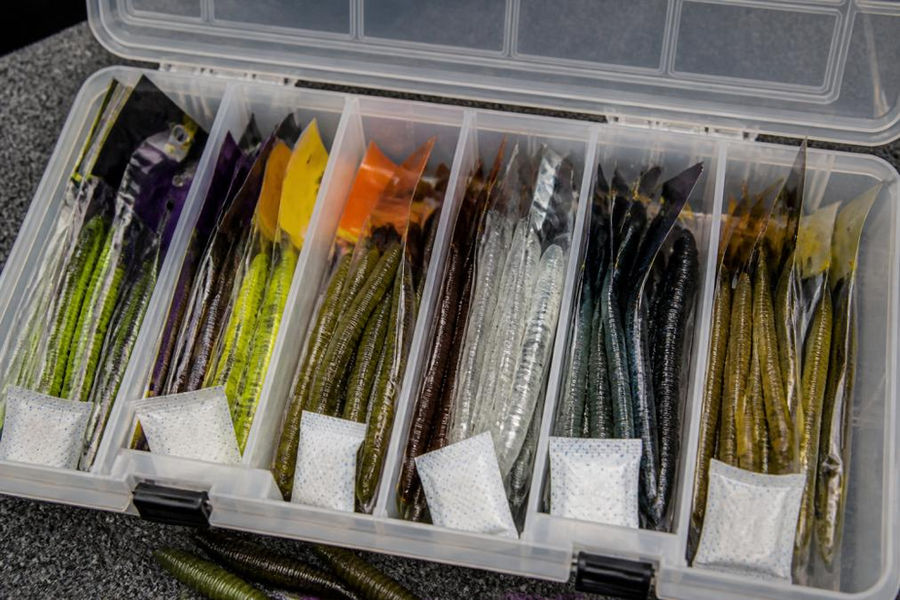
Soft plastics deserve special attention (pubmed.ncbi.nlm.nih.gov). Keep them in their original packaging whenever possible, because plasticizer migration can cause certain soft baits to melt or fuse with other plastics and with painted hard baits. Store them flat, away from direct sun, and never mix different plastic formulations in the same bag.
Long-Term Storage vs. Active Fishing Storage
Long-term storage and active fishing storage are not the same job. For baits you won't throw for months, use individual compartments or lure wraps, add a corrosion inhibitor, and keep the box sealed. For the handful of lures you fish every trip, a smaller, quick-access box with dividers prevents the constant jostling that causes finish damage.
Humidity Control and Moisture Management
Moisture is the enemy of terminal tackle. Silica gel packets placed in each box absorb ambient humidity and slow oxidation on hooks and hardware. Swap them out periodically, since they lose effectiveness once saturated. If you fish in the rain or store gear in a boat compartment, check boxes weekly during humid months.
Pro Tip A common mistake is sealing a damp lure box after a rainy trip. Crack the lid overnight in a dry space before closing it up. Trapped moisture is what drives rust far more than ambient humidity.
How to Keep Fishing Lures from Rusting
Keeping fishing lures from rusting comes down to drying them completely and blocking moisture from reaching the metal. Rust starts on hooks, split rings, and screw eyes, and it spreads to stain painted finishes and weaken wire hardware.
Freshwater Rinsing and Drying Techniques
After every trip, wipe each lure with a soft cloth and let it air-dry fully before it goes back in the box. Never store a wet lure, even briefly. For soft plastics, pat them dry and return them to their packaging.
Corrosion Inhibitors and Rust Prevention Products
Corrosion inhibitors, applied as a light film on hooks and hardware, create a barrier that slows oxidation. A dedicated tackle-box corrosion inhibitor strip is the simplest option. VCI (vapor corrosion inhibitor) products release a protective vapor inside a closed container, which is why they work well for long-term storage.
Storage Scenario | Moisture Control | Corrosion Protection | Best For |
Active box (fished weekly) | Silica gel packet | Light oil film | Lures in rotation |
Long-term storage | Sealed box + silica | VCI strip | Seasonal baits |
Boat compartment | Ventilated tray | VCI strip | Gear exposed to humidity |
Preventing Hook Rash on Lures: Treble Hook Covers and Guards
Preventing hook rash on lures is mostly about stopping treble hooks from swinging into painted surfaces. Hook rash, the cluster of scratches around a bait's belly and sides, comes from treble hooks contacting the finish during storage and transport.
Treble hook covers and guards solve this directly. A soft plastic or rubber guard slips over the points and holds the hook in place, so it can't swing freely against the body. This one habit protects both the paint and your fingers when you reach into a box.
Organizing Tackle to Prevent Paint Rash
Tackle box organization is your second line of defense. Use dividers, lure wraps, or individual slots so baits never touch. Group by size and type so heavier baits don't crush lighter ones. A little structure in the box prevents the cumulative scuffing that adds up over a season.
Watch Out Leaving treble hooks exposed in a loose box is the single fastest way to wreck a premium finish. The scratches happen in transit, not on the water, so you may not notice until the damage is done.
Cleaning Lures After Saltwater Exposure
Saltwater corrosion is aggressive and fast. If you fish brackish or coastal water, rinse every lure, hook, and split ring in fresh water within hours of leaving the water. Salt left on hardware pulls moisture from the air and accelerates rust, especially on hooks and screw eyes.
A freshwater rinse is simple: a quick soak in clean water, a wipe-down, and full air-drying. Pay attention to split rings and hook eyes, where salt hides. Replace any hook that shows pitting rather than trying to salvage it. As the American Sportfishing Association notes, gear care directly extends the life of your tackle investment.
Repairing Paint Chips and Applying Clear Coats
Repairing paint chips early stops small damage from spreading. A chipped finish exposes bare material that corrodes faster and can flake further with each cast. For minor chips, a matching touch-up paint followed by a clear coat restores both appearance and surface protection.
A clear coat adds a protective layer over the entire bait, guarding against hook rash and UV fading (pubmed.ncbi.nlm.nih.gov). Lure refinishing at home ranges from a simple brush-on clear coat to full repaints for heavily worn baits. Let each coat cure fully before fishing the lure.
Chemical Compatibility Guide for Lure Refinishing
Chemical compatibility matters more than most anglers realize, and it is the single biggest reason home refinishing jobs fail. Not every clear coat plays well with every lure material or existing finish. Solvent-based coatings can attack certain plastics and soft finishes, while water-based options are gentler but may need more coats. Test any product on an inconspicuous spot first, and never mix incompatible coatings on the same bait.
The table below is the reference most lure-care articles skip: which material combinations are safe to store or coat together, and which will melt, fuse, or cloud. Treat it as a starting point, not a guarantee, formulations vary by brand, so always spot-test.
Material A | Material B | Interaction | Practical Guidance |
Soft plastic (PVC-based) | Soft plastic (different formulation) | Plasticizer migration; baits can melt or fuse | Store separately, keep in original bags |
Soft plastic | Painted hard bait finish | Finish softening and color bleed | Never store soft plastics against hard baits |
Soft plastic | Solvent-based clear coat | Coating may not adhere; plastic can deform | Use water-based coatings on plastics |
Hard plastic body | Solvent-based clear coat | Generally compatible | Spot-test first; thin coats |
Hard plastic body | Water-based clear coat | Compatible but may need extra coats | Build in thin layers |
Wooden bait | Solvent-based clear coat | Compatible; seals bare wood | Seal bare spots before topcoat |
Metal hardware (hooks, split rings) | Most clear coats | Poor adhesion; coating flakes off | Do not coat hardware; use corrosion inhibitor instead |
Foil or holographic finish | Solvent-based clear coat | Can lift or cloud the foil | Use water-based or skip coating |
A few rules of thumb fall out of this chart:
Plastics and solvents rarely mix. If a product label lists a strong solvent, keep it away from soft plastics and foil finishes.
Water-based coatings are the safer default for mixed-material baits, at the cost of more coats and longer cure times.
Hardware should never be clear-coated. Coatings flake off hooks and split rings; use a corrosion inhibitor or VCI product instead.
When in doubt, isolate. Storing incompatible materials in separate compartments prevents the slow, invisible damage that shows up weeks later.
Watch Out Plasticizer migration is not reversible. Once a soft bait has fused to a painted hard bait, both finishes are compromised. Separation in storage is the only reliable prevention.
Eco-Friendly Lure Maintenance Practices
Eco-friendly maintenance keeps your gear out of the waste stream and your water clean. Replacing hooks and split rings instead of whole lures extends a bait's life for years. Choosing biodegradable or low-toxicity cleaners and avoiding harsh solvents reduces what washes off your gear into the water.
Repair over replace is the core principle. A lure with a fresh clear coat and new treble hooks fishes like new at a fraction of the cost, and fewer discarded baits means less tackle lost to the environment.
Non-Toxic Rust Inhibitors and Cleaners
Most conventional rust treatments rely on petroleum distillates and solvents that end up on your hands, in your boat, and eventually in the water. A growing set of alternatives works without that trade-off:
VCI (vapor corrosion inhibitor) emitters, the same technology used to protect shipped machinery. They release a harmless vapor inside a closed box that bonds to metal surfaces and blocks oxidation. No residue on the lure, no solvent runoff.
Plant-derived corrosion inhibitors, formulations built on lanolin, beeswax, or vegetable-derived esters create a thin barrier film on hooks and hardware. They are slower to dry than petroleum products but wipe off cleanly and are far less toxic.
Mild soap and fresh water, for routine cleaning, a drop of biodegradable dish soap in a bucket of fresh water removes salt, grime, and fish slime without solvents. Rinse thoroughly and dry completely.
White vinegar soaks, a diluted white vinegar bath loosens light surface rust on hooks and split rings. It is acidic, so keep soaks short, rinse well, and dry immediately to avoid etching good metal.
Baking soda paste, for spot rust on hardware, a paste of baking soda and water lifts oxidation without harsh chemicals. Rinse and dry after.
What to Avoid
Bleach and ammonia, corrosive to hooks and hardware, and harmful in runoff.
Strong solvents (acetone, lacquer thinner), effective on some finishes but toxic, flammable, and prone to attacking plastics.
Aerosol lubricants with PTFE or heavy solvents, convenient, but they leave persistent residue and are easy to over-apply.
Sustainable Tackle Habits That Pay Off
Keep a hook-replacement kit, a few sizes of treble hooks and split rings let you refresh a bait in minutes instead of replacing it.
Retire lures responsibly, worn soft plastics and damaged hard baits belong in the trash, not the water. Collect them in a dedicated bag on the boat.
Buy refillable, corrosion inhibitor strips, silica gel, and cleaning concentrates in refillable or bulk formats cut packaging waste and cost per use.
Rinse at the ramp, a fresh-water rinse before you leave the water removes salt and invasive species residue in one step.
Pro Tip A small spray bottle of diluted biodegradable soap and a microfiber cloth kept in the boat makes post-trip cleanup a two-minute habit instead of a chore. The less effort it takes, the more consistently you will do it.
Common Lure Care Mistakes to Avoid
Storing wet lures, which invites rust overnight
Mixing soft plastics loosely, causing plasticizer migration and melting
Skipping hook guards, which leads to paint rash in transit
Ignoring saltwater exposure until corrosion sets in
Using incompatible coatings during refinishing
Letting silica gel packets saturate without replacing them
Key Takeaway The habits that prevent damaged fishing lures are cheap and fast: dry every lure, guard every hook, control moisture, and repair chips early. Do these and your baits last for seasons, not trips.
Frequently Asked Questions
Do people use WD-40 on fishing lures?
Some anglers spray WD-40 on lures to mask human scent or add shine, but it can degrade soft plastics and attract dirt. For rust prevention, use a dedicated corrosion inhibitor instead. WD-40's solvents may damage clear coats and painted finishes over time. If you want to protect metal components, apply a thin layer of reel oil or a silicone-based protectant to hooks and split rings, not the lure body.
What is the best way to store fishing lures to prevent damage?
Store hard baits in divided tackle boxes with individual compartments or hook guards to prevent treble hooks from scratching adjacent lures. Keep soft plastics in their original bags to avoid plasticizer migration, which can melt other plastics. Add silica gel packets to control humidity. For long-term storage, use a cool, dry place away from direct sunlight. Active fishing storage should prioritize quick access without sacrificing protection.
How do you stop fishing lures from rusting in the tackle box?
Rust forms when moisture lingers on hooks and hardware. After each trip, dry lures completely with a microfiber cloth. Add silica gel packets to your tackle box to absorb humidity. Apply a corrosion inhibitor to treble hooks and split rings. Avoid storing wet lures in sealed containers. For saltwater use, rinse with freshwater and dry before storage. Replace rusted hooks promptly to prevent finish damage.
How do you fix hook rash on hard plastic lures?
Hook rash, the scratches and paint chips from treble hooks rubbing against the lure body, can be minimized with hook guards or by removing hooks during storage. For existing damage, clean the area with isopropyl alcohol, apply a matching paint or nail polish, and seal with a clear coat. To prevent future rash, use treble hook covers and store lures in individual compartments. Regular inspection and touch-ups extend lure longevity.
Protecting your tackle is really about protecting your time on the water. At Pine State Tackle, we stock the premium JDM and domestic baits worth caring for, from Megabass and Geecrack to 6th Sense, and we ship them with the same care we'd want for our own boxes. With free domestic shipping on orders over $99 and wholesale availability on all PST products, keeping your arsenal in top shape starts with the right gear. Download our App and get started with Pine State Tackle.
Download our App!


Comments